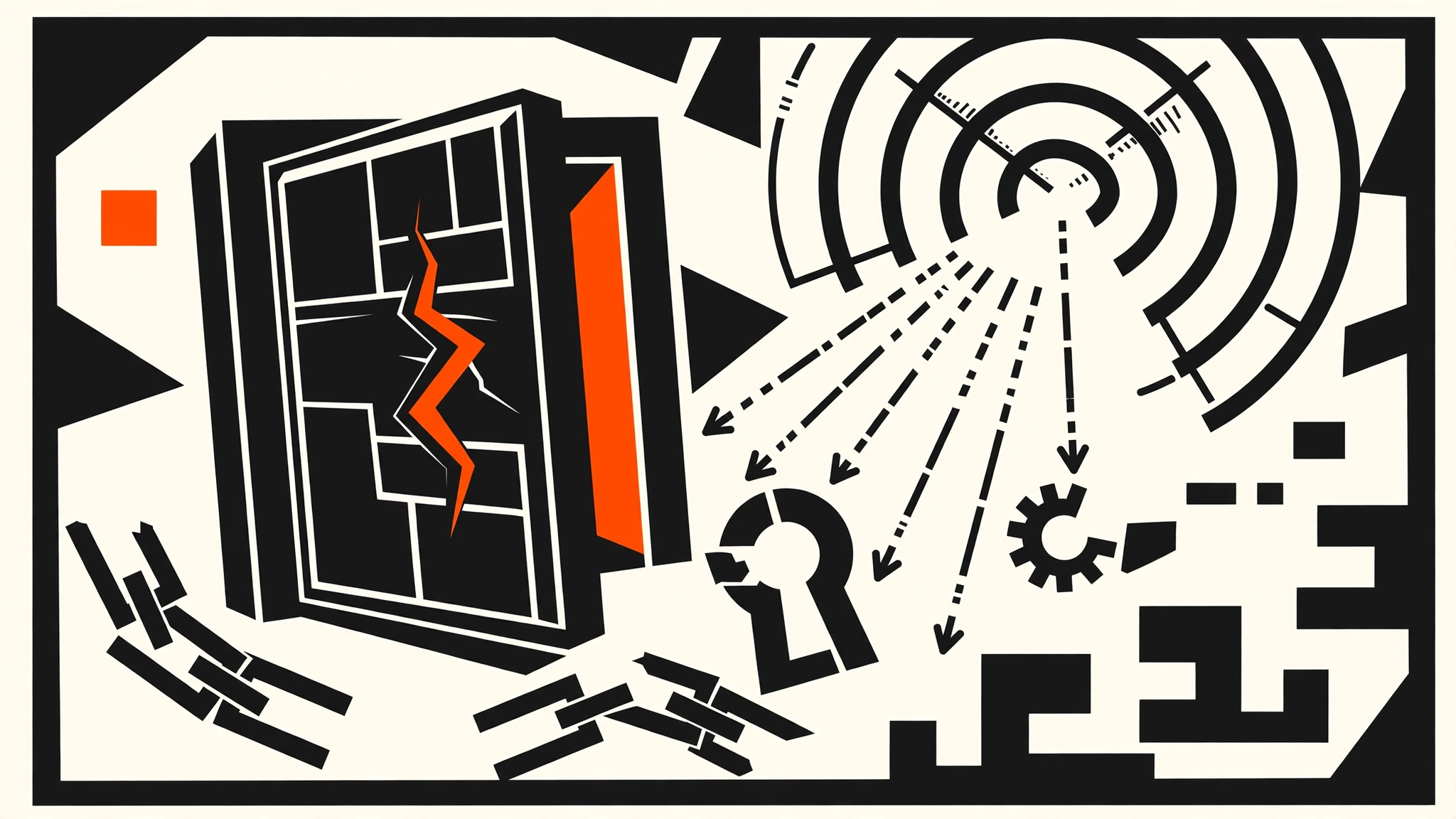
On Tuesday, November 24, 2026, the New York Times reported that the CIA and the Office of the Director of National Intelligence had discovered a breach of an unclassified system both agencies use to analyze public information. The tool believed to have been used in the breach is ARTEX — an AI harness that automatically finds and breaks into computer systems. Eight days earlier, Google’s Threat Intelligence Group had named ARTEX in a report warning that AI agents had crossed the line into fully automated hacking. The warning is no longer theoretical. This post covers what actually happened, why “unclassified” does not mean harmless, and the five-part defense pattern you should steal for your own n8n agents.
What happened on November 24
The intrusion hit a network the CIA and ODNI use for open-source intelligence — OSINT, the analysis of publicly available material such as news reports, social media, commercial satellite imagery, and data-broker records. Four sources familiar with the matter confirmed the breach to CNN; the Times first reported it. The National Geospatial-Intelligence Agency was concurrently affected, according to the Times.
Two facts matter most. First, no classified information was affected, according to officials. An ODNI official told CNN there had been “no disruptions to critical capabilities or classified systems,” and one person familiar with the matter told Nextgov/FCW the disruption was resolved. The CIA declined to comment. Second, what was taken — if anything — is still unknown. The Times did not say how the breach occurred, and CNN reported it was not immediately clear when the hack happened or whether it has been resolved. Early indications suggest the hack may have originated in China, though it was not immediately clear if the country’s government was involved, two sources told CNN.
The breach is not an isolated incident. It is the latest entry in a two-week run of federal-system failures and intrusions: an apparent hack of the FBI’s National Crime Information Center database, first reported by CNN on Friday, November 20; Agriculture Department applications taken offline after a security incident; and the NSA’s classified communications network going down for three days last week before resuming normal operations on Friday, November 20 — a disruption Director of National Intelligence Jay Clayton attributed to software patching, not a cyberattack. The same week brought a nationwide FAA ground stop traced to a single router in Arkansas and a Microsoft 365 outage that locked people out of Outlook and Teams.
What ARTEX is — and why Google’s warning matters now
ARTEX is an AI tool developed by a Chinese cybersecurity engineer known as “Autumn-27.” Nextgov/FCW describes it as a tool that “automatically finds and breaks into computer systems” and notes it has “recently become a favorite tool of criminal hackers.” It is believed to have been used in the CIA/ODNI breach, and hackers recently used ARTEX to assist in an intrusion into the Defense Department’s Cyber Defense Command, two people familiar with the matter told Nextgov/FCW — though one added that breach was low-impact.
That is what makes the timing significant. On November 16, 2026, Google’s Threat Intelligence Group published its AI Threat Tracker, “Agentic Threat Activity Crosses a Significant Threshold,” documenting the first case of fully automated vulnerability discovery and exploitation with no human in the loop. The report named ARTEX alongside CAIRN, CyberStrikeAI, HexStrike AI, and PentAGI as the new class of AI attack tooling. Google’s numbers showed the tempo: zero-days discovered per month rose from an average of 8 in 2025 to 11 in 2026, spiking to 22 in August 2026. CNN, reporting the CIA breach, noted that government agencies and companies are “discovering a spate of new software bugs in their systems thanks to AI, prompting a rush to fix them and sometimes mistakes along the way.”

Read the two reports together and the story is plain: the eight days between Google’s warning and the CIA breach are the gap between a capability being documented and a capability being used against the hardest targets in the world. ARTEX did not need to touch a classified file to matter.
Why “unclassified” does not mean harmless
The instinctive reaction to this story is relief: nothing classified was touched, so nothing important was lost. That is the wrong read, and the security researchers quoted in the coverage say so directly.
Ben Bernstein, a manager at cybersecurity firm Huntress, told Nextgov/FCW: “If you can see what analysts are searching for and what topics they’re tracking, you get a solid look at U.S. intelligence priorities and blind spots without ever touching a classified file.” Aleksandr Yampolskiy, co-founder and CEO at SecurityScorecard, added that depending on what was exposed, an adversary could learn not only what the agencies know, but where their investigative priorities lie and where gaps in their intelligence may exist. Bernstein’s summary: “Calling this ‘unclassified’ doesn’t make it harmless, though.”
The same logic applies to your agents. An n8n workflow’s search history, tool-call log, and prompt text are its version of “what analysts are searching for.” A workflow that researches a supplier, checks a pricing API, or scrapes a competitor’s site leaks intent with every call — and intent is exactly what an attacker needs to know which door to try next. Your agent’s queries are metadata, and metadata is the target now.
The pattern: patch fast, shrink the surface, gate the writes
There is a defense pattern here, and it is the same one this blog has been building article by article. The CIA breach does not change the pattern — it raises the stakes for skipping it. Five parts, in order:
1. Patch on patch day. AI is now finding vulnerabilities faster than humans can triage them — Google’s zero-day numbers prove it, and the NSA’s three-day outage shows what happens when the patching itself goes wrong. In n8n, that means a scheduled workflow that checks your dependencies and your n8n version weekly, not when something breaks. Keep a pinned, tested n8n version and upgrade on a schedule you control; an unpatched webhook endpoint is the cheapest door ARTEX-style tooling can find. (See the Censys hardening checklist for the exposed-instance numbers.)
2. Shrink the surface. ARTEX finds and breaks into systems automatically, which means it finds whatever is reachable. Every public webhook, every open port, every test workflow left running in production is a candidate. Audit monthly: disable workflows you are not using, remove credentials you no longer need, and put anything that does not need to face the internet behind authentication. If a workflow only runs on a schedule, it does not need a public webhook URL at all.
3. Least-privilege credentials. The breach’s damage was bounded because the compromised system held unclassified material. Bound your blast radius the same way: give each n8n credential the smallest scope that lets the job run. A read-only API key for a research workflow, a separate key with write scope for the one workflow that publishes, and nothing shared between them. When one key leaks — and keys leak — the attacker gets one drawer, not the whole cabinet.
4. A human approval gate before anything irreversible. This is the rule that matters most and the one most often skipped. No agent should send money, publish, delete, or change a production system without a human saying yes. In n8n, that is a Wait node paired with a human approval step (Slack, email, or Telegram) before the HTTP Request node that writes. The pattern is the same one from the Google exploit-agent article and the n8n 2.43 guardrails release: the agent proposes, the human disposes, and the log records both.
5. Monitor off the channel you are protecting. The CIA breach was discovered — that is the good news in the story. Discovery happened because someone was watching a system whose job is watching other systems. Your n8n instance needs the same arrangement: execution logs shipped somewhere the workflow itself cannot rewrite, a daily digest of failed executions and unexpected credential use, and an alert that fires when a workflow you did not touch starts running. If the only copy of the log lives inside the system being attacked, you have no log.
What this changes for builders this week
Three concrete actions, in order of urgency. First, check your n8n version and patch it — the version you are running is either current or it is the vulnerability. Second, run the exposed-surface audit: list every active webhook URL, every credential with write scope, and every workflow with no approval gate, and close what you cannot justify. Third, add the approval gate to the one workflow that scares you most — the one that moves money, publishes, or deletes. Do that one today; the rest can follow the schedule.
The broader lesson is the one Google’s report and the CIA breach now share: the attack side of AI agents is no longer a research topic. It is an operational reality with a named tool, a known developer handle, and a breach of three US intelligence agencies inside eight days of the warning. The defense side has to be operational too — not a roadmap item, but a workflow with a schedule, a gate, and a log.
Honest limits
Attribution here is provisional, and the article says so wherever it matters. ARTEX is believed to have been used in the breach — that is what sources familiar with the matter told Nextgov/FCW, not an official finding, and the Times did not say how the breach occurred. Early indications point to China as the origin, but whether the Chinese government was involved is explicitly unclear. What data, if any, was taken is unknown, and the exact timing of the intrusion is unclear. The DCDC intrusion ARTEX assisted was described as low-impact. Treat the story as what it is: a credible, multi-sourced report of a serious breach with an AI tool at its center — not a confirmed attribution, and not a reason to panic. It is a reason to patch, shrink, and gate.
FAQ
Was any classified information stolen in the CIA breach?
According to officials, no. The ODNI told CNN there were “no disruptions to critical capabilities or classified systems,” and a source told Nextgov/FCW the disruption was resolved without affecting classified systems. What unclassified material may have been exposed is still unclear.
What is ARTEX?
An AI tool developed by a Chinese cybersecurity engineer known as “Autumn-27” that automatically finds and breaks into computer systems. Google’s Threat Intelligence Group named it in its November 16, 2026 report on AI-driven attacks, and sources told Nextgov/FCW it is believed to have been used in the CIA/ODNI breach and in an intrusion into the Defense Department’s Cyber Defense Command.
How is this different from the Google exploit-agent story from November 17?
That article covered Google’s report documenting the capability: fully automated vulnerability discovery and exploitation with no human in the loop. This breach is the capability being used — against US intelligence agencies, eight days later. Same tool class, same warning, new event.
Does this affect my n8n instance?
Directly, no — there is no evidence n8n was involved. Indirectly, yes: the same class of automated tooling scans the whole internet for reachable systems, and exposed n8n instances are a known target. Patch, shrink the surface, and gate the writes, as above.
Key Takeaways
- The CIA/ODNI unclassified OSINT system was breached on November 24, 2026 — NYT first reported it; NGA was concurrently affected; no classified systems were touched, and what was taken is still unknown.
- ARTEX is believed to have been used — the AI harness Google named 8 days earlier in its threat report, built by “Autumn-27,” which automatically finds and breaks into systems. It also assisted a low-impact intrusion into the Defense Department’s Cyber Defense Command.
- “Unclassified” is not harmless — an attacker’s view of what analysts search for reveals priorities and blind spots. Your agent’s queries and logs are the same kind of target.
- The defense pattern is five parts: patch on patch day, shrink the surface, least-privilege credentials, a human approval gate before anything irreversible, and monitoring that lives off the channel it protects.
- Do the scary workflow first — add the approval gate to the one workflow that moves money, publishes, or deletes, today.
Next: run the exposed-surface audit on your own n8n instance this week — the Censys hardening checklist gives you the numbers to check against.
Sources: Nextgov/FCW, “CIA, ODNI unclassified intelligence system hacked” (Nov 24, 2026); CNN, “CIA hit by hack impacting unclassified information” (Nov 24, 2026); AP via syndication (Nov 24, 2026); Google Threat Intelligence Group, “Agentic Threat Activity Crosses a Significant Threshold” (Nov 16, 2026). Attribution of the breach to ARTEX and to China is reported by sources familiar with the matter, not confirmed by officials.